
So.

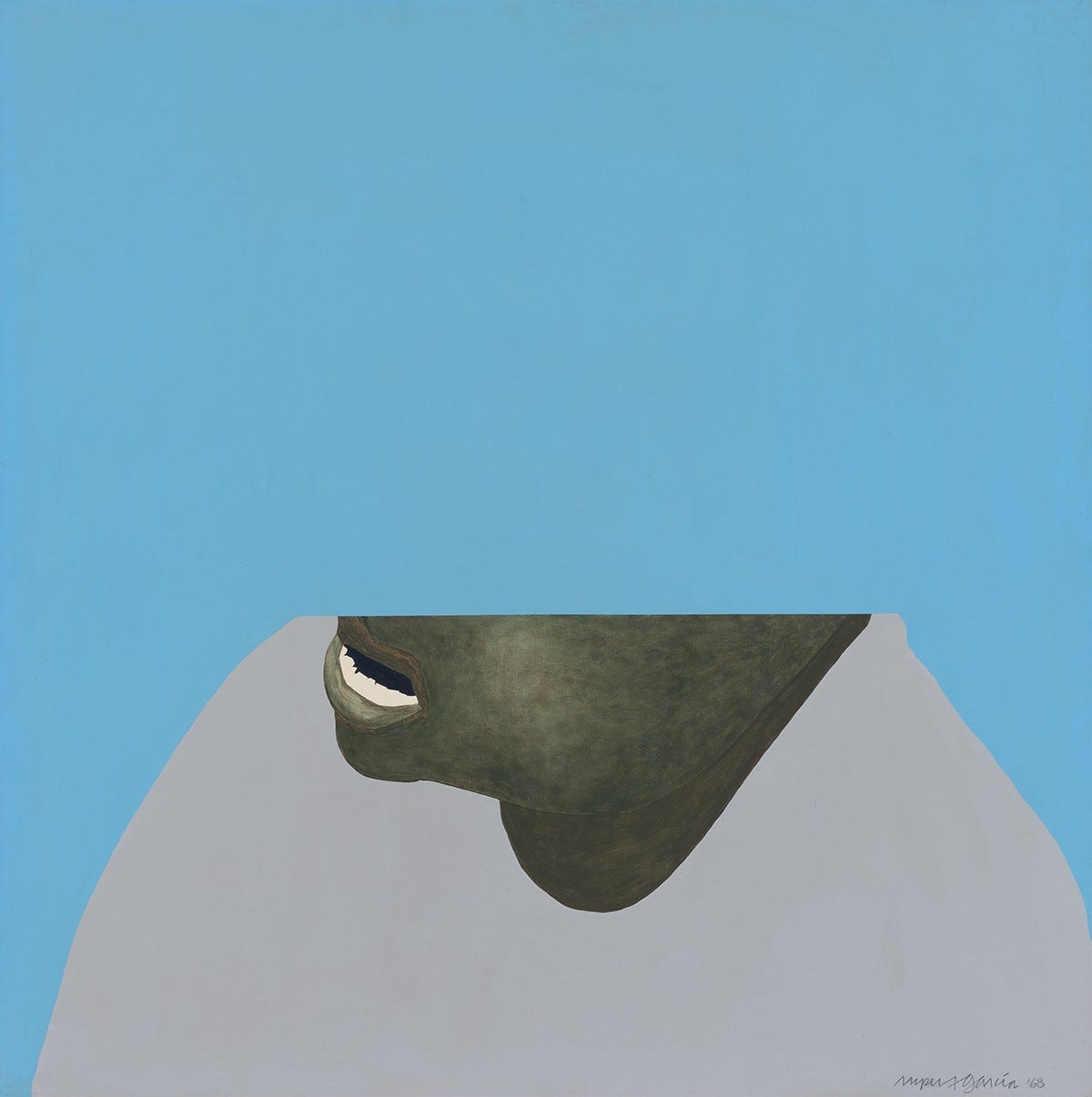
On Saturday, April 11 at 7:30pm, KHORIKOS is performing at the Guggenheim Museum in NYC, and no I’m not totally clear on how this came to be. But life only gives one so many Guggenheims, so we’re bringing a set that feels permanent collection-level, and I hope you’ll come listen. Unfortunately only standing-room tickets are still available; all the seats on the floor were sold before we could even manage to get the link out through KHORIKOS channels. But if it’s any consolation, all the singers and I will be standing too, and I can promise it’ll be worth it insomuch as anyone has the power to promise anything. Some highlights:
a few big modern emotional outbursts like the Tavener Song for Athene, which changed me.
the last two tracks from Across the Open Spaces, which get at a collective ideal but in two very different ways (the Kile Smith with unity and homophony; the Anna Meredith an elegant latticework of self-expressing individuals and also a wild rumpus)
a brand-new piece I asked Charlotte Greve to write for the occasion, for us and her to play together on. She plays alto saxophone as naturally as you and I breathe. Who am I to tell you how vibrant and inspiring it is? You’ll simply have to come.
I also wrote music, as a transition between two other pieces, to be sung while the singers are moving up the ramps. At first it was a little something to fill that time and get us from Dbmaj to Fmaj smoothly, and it became something about choice and constraint and Bb-G-A-C-F-Bb. I used the same poem that I offered to Charlotte for her piece (Denise Levertov’s Continuing) but she committed the whole thing to music, while I’ve set just the last word:
    From desire to desire
                                           plucking
    white petals away from their
    green centres.                It was thus and thus
    repeats the head, the fantasist.
				                          No matter:
    that wind sweeps forward
    again—life itself.
	         Gather them, flawed, curled
	         veined like a child’s temple
	         heaped one on another
		                                           irregular
    displaced at a breath: secrets . . .
			                      So
    one smiled, another turned pages:
    steady, heartbeats apart; many
    continuing variously—
    And the stripped green? Alert, hard
    on a thick stalk. So.
The piece is semi-aleatoric: the basses have a bunch of set intervals, and everyone else has a range of notes to choose from and some loose instructions about rhythm and dynamics. I conduct the basses alone while everyone else moves, simultaneously walking and listening for when that one stable element changes, before they start fresh with their next set of notes. Each chord is an island, about 8 seconds long, both spasmodic and chill. With the big reverb in there, most of what we’ll get is a smattering of colors in sequence. The basses remain steady, crucially. From the firmament, a prompt: So.
(Now what?)
The writing process was a semi-conscious step (or maybe a conscious step and an unconscious tumble) toward my ongoing goal of writing music (and words, like these) without having to think so much in advance, procrasti-planning the thing to oblivion before getting anything on the page. To write first and ask questions later. It was a gesture born of doubt (as a virtue, if you please) and constraint, that revealed itself to be a “medium is the message” situation: the performers have to seek stability and exercise imagination at the same time.
At the end of the piece, the tenors, sopranos, and altos stabilize, before the basses desynchronize. All we have is the present moment but it also doesn’t exist. It’s over as soon as it’s recognized; we’re constantly midst-of.
I will probably cite this Fanny Howe piece, my sacred text, once every two newsletters until I die but:
When all the structures granted by common agreement fall away and that “reliable chain of cause and effect” that Hannah Arendt talks about—breaks—then a person’s inner logic also collapses. She moves and sees at the same time, which is terrifying.
Yet strangely it is in this moment that doubt shows itself to be the physical double to belief; it is the quality that nourishes willpower, and the one that is the invisible engine behind every step taken.
Doubt is what allows a single gesture to have a heart.
uh “Presence,” but really, the self-check
In Retirement Plan, one of this year’s Oscar-nominated shorts, our guy is confronting his expansive list of life goals. “I will be so present. So aggressively present.”
An increasingly regular feature of my everyday life-living is a kind of self-dialogue, which I recognize as an oxymoron. In moments of directionlessness or under-motivation, it has served me to talk to myself like a child: what are you doing/thinking/feeling right now? This can make way for an intentional shift, as I hear it does for other people, but of this whole practice I remain wary: the point is not to be in control of what I’m doing or thinking all the time, but rather to get at some ideal order/chaos balance. To take in what is right in front of me, as it is, and to give it its due, and remain sensitive to context at the same time. Also if I could meet more of the due dates I set for myself that’d be great thanks.
If you manage to guide yourself into a flow, like you’re biking slightly downhill on a nice day and enjoying a lil momentum finally, there’s still the matter of the inevitable uphill. Oh I would love for it to be so simple as “it feels good = it is good” and even while those are increasingly in alignment (!) there’s still good reason for the self-check, on one’s motivations: impulses and/or reasons for biking up one hill or another. In my last newsletter I was trying to work out a kind of focus that doesn’t feel like an act of pushing away; as not-constraining but habituating a kind of zooming-in that somehow opens more than closes, if that’s possible. The self-check is supposed to help with this.
A pesky issue is that the self-check risks being an isolating move. If I catch myself reading some news about our murderous government or whatever other zero-sum trap we have to confront every day, I push it away, out of a sense of it’s not me: so starkly not the world I want to live in or work towards. We expend so much energy absorbing and/or dodging all this wrong. It’s extra isolating to then elect your own virtues and moral structures—to figure out how you feel about it all—at least until you can sanity-check with friends. (Or, writ large, build community.)
It shouldn’t be incumbent on us to invent purpose for ourselves in every moment, as if it’s the only option other than falling in line or being angry and stuck all the time. But here we are, at “now what?”, so. Maybe the self-check is not just “what am I doing right now?” but also “what has changed since last time I checked?” That way the observation includes some directionality one way or another, which you can do something with.
I also wonder if this scanning for change is at the root of imagining change (I’m using that word specifically for its positiveness.) Art regularly promises to widen imagination, and I accept this to be true in part bc I really have no idea what I’m doing here with music if not that. I had this thought not while enraptured by glorious muuuusic but upon the most unlikely occasion of reading this brief history of airline deregulation in which an examination of history leads the author to imagine a better way?! Love to see it. But if you benefit more from music making the case, as I do ultimately, Nico Muhly’s fantastic new Lamentations settings speak clearly: “to remember our history is to lament, to wail” and in that music is a sense of opening. We can offer each other a variety of agendas to combat stasis; we can prompt each other to bend cycles.
Two other good things that I can’t find a way to exploit to buttress this little essay
A few weeks ago, the NY Philharmonic premiered an elaborate orchestral version of Frederic Rzewski’s 1975 The People United Will Never Be Defeated!, itself a theme-and-variations on the Chilean anti-Pinochet song, ¡El pueblo unido jamás será vencido!. Chills thinking about this piece and ephemeral event. I am telling you about this now even though I don’t have a recording of the orchestral performance to share, and I worry that there will never be one, and yet I promise it’s worth knowing about.
What makes this particularly special is that the Phil commissioned 18 composers to orchestrate a variation or two each, which fit together seamlessly and with (apparently?!) minimal communication between the composers. I have inside intel that says they were given few constraints other than their assigned variation. Each composer (including my dear friend Joel Thompson, currently in residence at the Houston Grand Opera) embraced both that one constraint, on their own terms, and their inimitable selves. This was collective expression. A model. If you want a list of composers to watch out for, you’d be hard pressed to find a better list than this one (or, just saying, a KHORIKOS program :)
(Speaking of which, this reignited a matchbook’s-worth of ideas I have for a similar grand commissioning projects involving KHORIKOS’ roster, one involving even more Denise Levertov and another a certain unfinished Mozart chart)
Primo Levi, Italian chemist, writer, and Holocaust survivor, ends his collection of short stories The Periodic Table with his “first literary dream,” the story of an atom of carbon.
It was caught by the wind, flung down on the earth, lifted ten kilometers high. It was breathed in by a falcon, descending into its precipitating lungs, but did not penetrate its rich blood and was expelled. It dissolved three times in the water of the sea, once in the water of a cascading torrent, and again was expelled. It traveled with the wind for eight years: now high, now low, on the sea and among the clouds, over forests, deserts, and limitless expanses of ice; then it stumbled into capture and the organic adventure.
No spoilers here, just the humility of the reminder that change is both inevitable and observable, instructional.
Thanks for reading and listening. If you’re new to this newsletter: this is usually an every-few-months sort of thing, with brief updates on my work and other collected ideas. I write this in part as an alternative to posting on other social media platforms. If you’d rather not receive emails from me, feel free to unsubscribe.
Hope to hear from you soon,
Alec